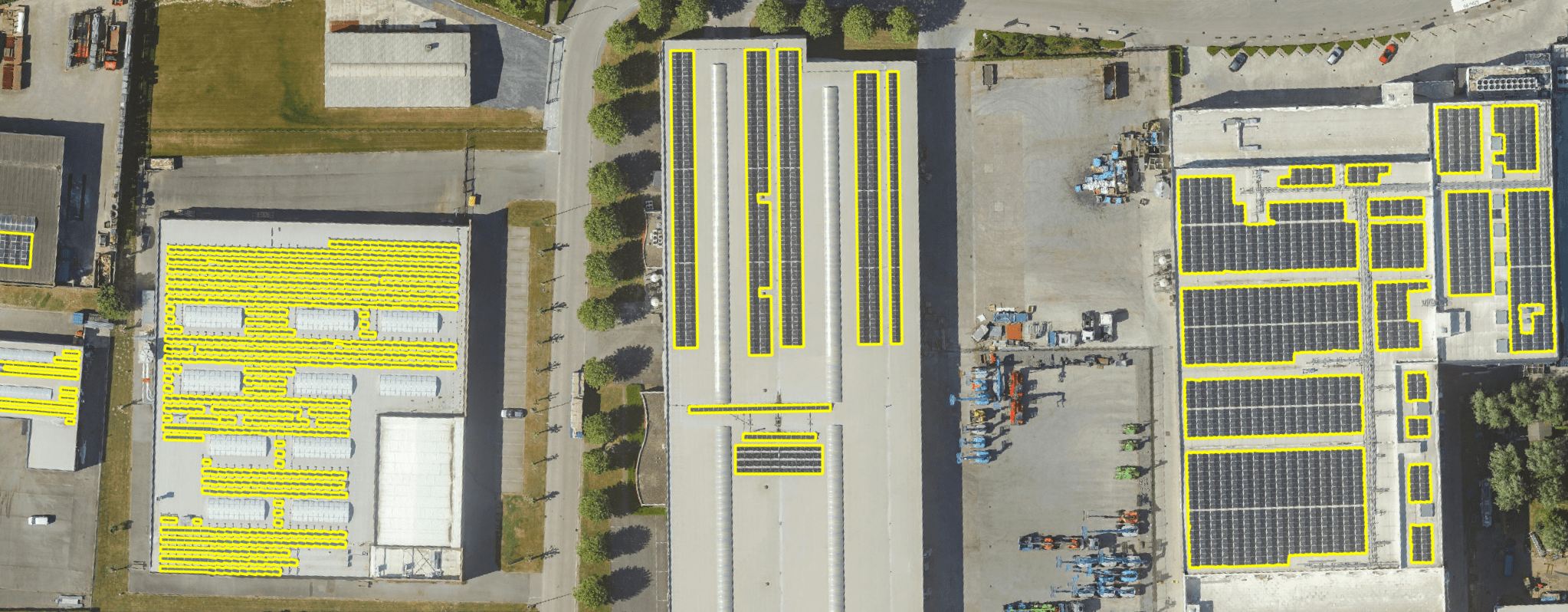
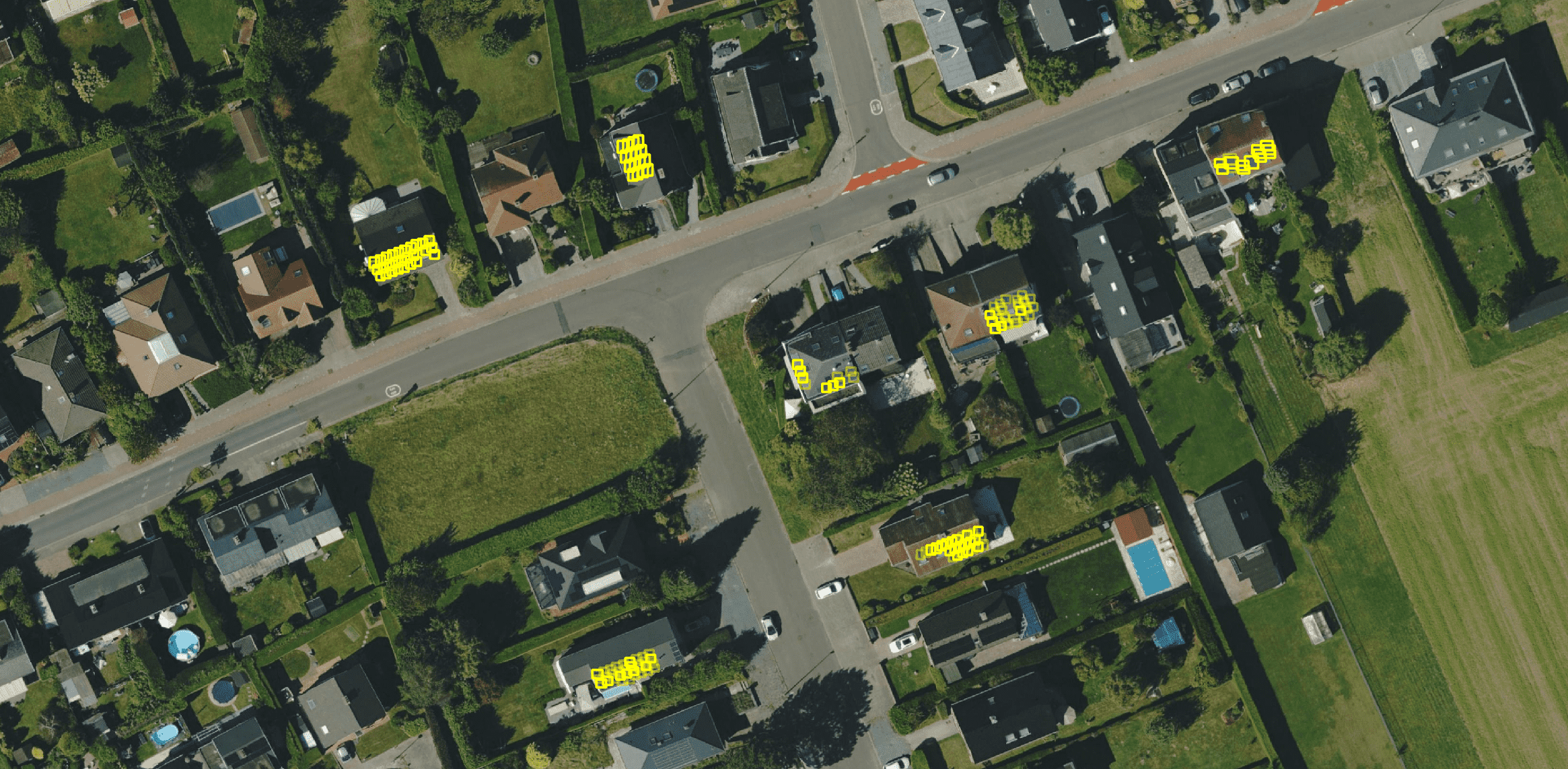
Ons detectiesysteem levert een gedetailleerd overzicht van zonnepanelen op daken, gebaseerd op onze eigen luchtbeelden en DEM’s, die zijn afgeleid uit onze LIDAR-gegevens.
Our detection system delivers a detailed overview of solar panels on rooftops, based on our own aerial imagery and DEMs derived from our LiDAR Point Cloud data.
By default we provide a clear indicator of solar panel presence. As an extension, we can also delineate the full solar panel clusters, giving you an accurate map of the installations.
From this, various statistics and insights can be derived, with or without our involvement, so that policymakers and businesses can always choose the level of detail that best suits their application and sustainable energy planning.
The data is delivered in ready-to-use GIS formats and the desired coordinate system, fully checked for quality. Thanks to our uniform data structure, the inventory integrates seamlessly into existing databases and workflows.
Our solar panel inventory is AI-driven but always human-validated. Every delivery undergoes a thorough quality control process, ensuring a minimal margin of error and maximum reliability.



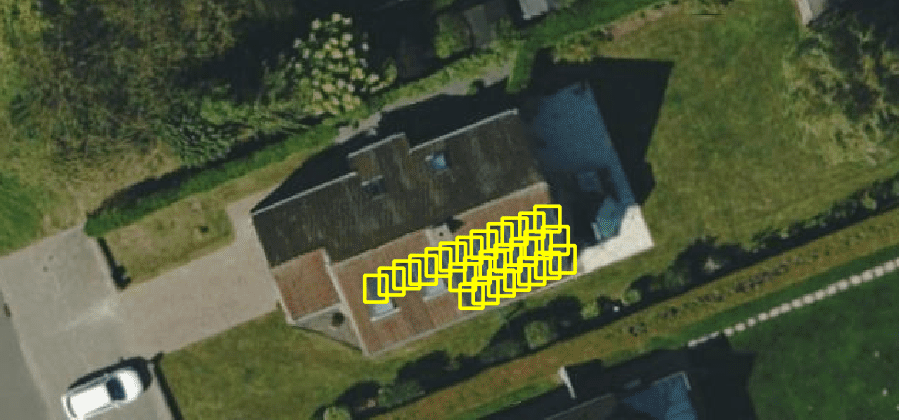
Our detection models were developed in collaboration with EAVISE (KU Leuven), a leading research group in visual AI. This guarantees innovative algorithms and reliable results. These Deep Learning algorithms automatically recognise solar panels based on shape, reflection and colour contrast. After the automated detection, a thorough quality control is carried out by our specialists to minimise incorrect classifications. This gives us a reliability of over 95%.
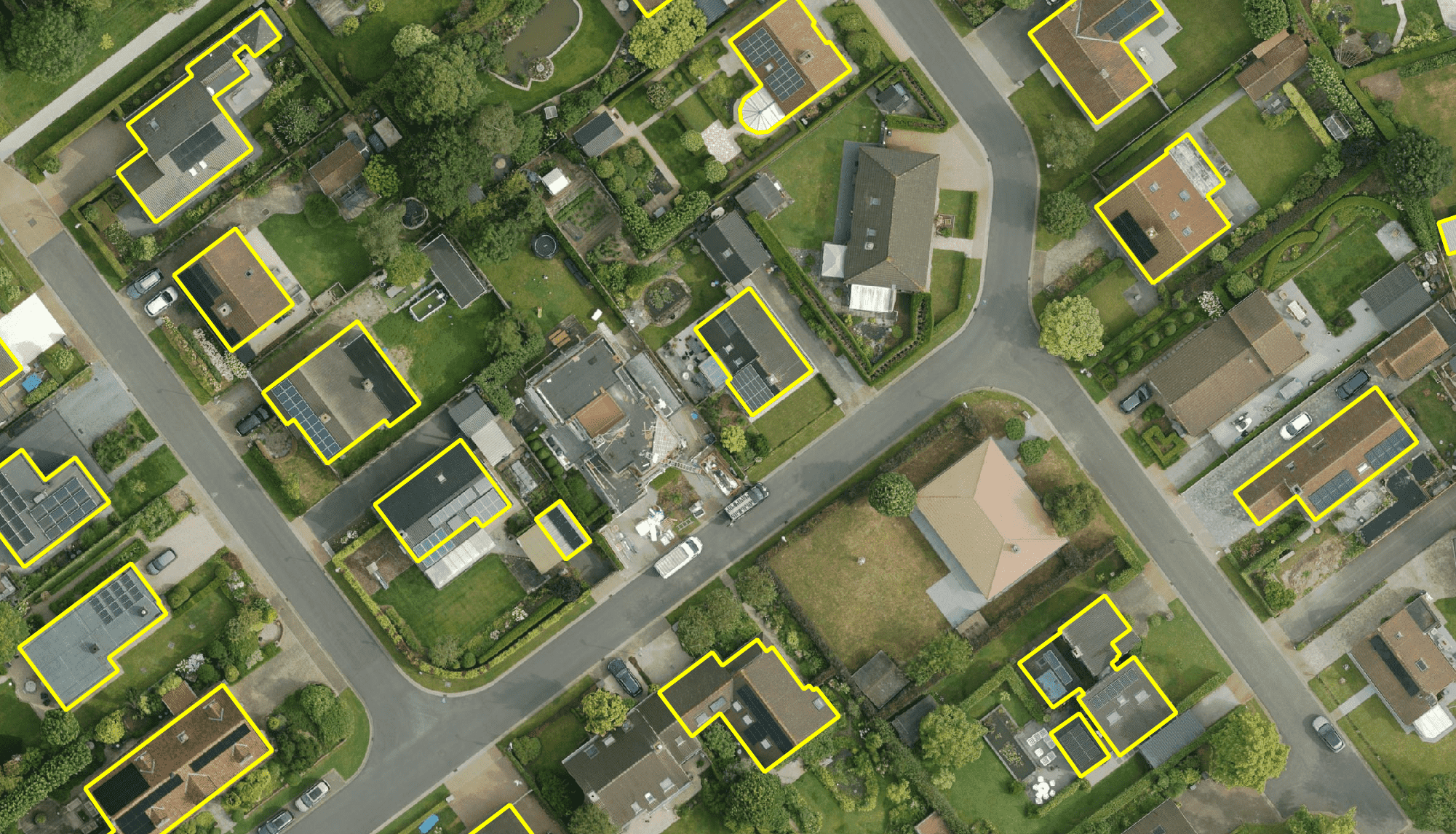
We think along with your application and deliver data at building level for energy policy, fiscal analyses and sustainability monitoring, or at object level for spatial planning, grid management and AI training. We also hold historical datasets and carry out new captures every two years, allowing you to track developments over time, such as the growth of solar energy.

The data integrates seamlessly into your existing GIS workflows. This allows you to easily analyse solar panels in combination with permits, sustainability targets or spatial plans, so insights are immediately actionable for policy and implementation.
Our detection models were developed in collaboration with EAVISE (KU Leuven), a leading research group in visual AI. This guarantees innovative algorithms and reliable results. These Deep Learning algorithms automatically recognise solar panels based on shape, reflection and colour contrast. After the automated detection, a thorough quality control is carried out by our specialists to minimise incorrect classifications. This gives us a reliability of over 95%.
We think along with your application and deliver data at building level for energy policy, fiscal analyses and sustainability monitoring, or at object level for spatial planning, grid management and AI training. We also hold historical datasets and carry out new captures every two years, allowing you to track developments over time, such as the growth of solar energy.
The data integrates seamlessly into your existing GIS workflows. This allows you to easily analyse solar panels in combination with permits, sustainability targets or spatial plans, so insights are immediately actionable for policy and implementation.

By 2040, Flanders must be asbestos-safe. Our aerial imagery and Deep Learning flag which roofs are suspected per address, so we can work together efficiently towards a healthier and safer living environment.
read more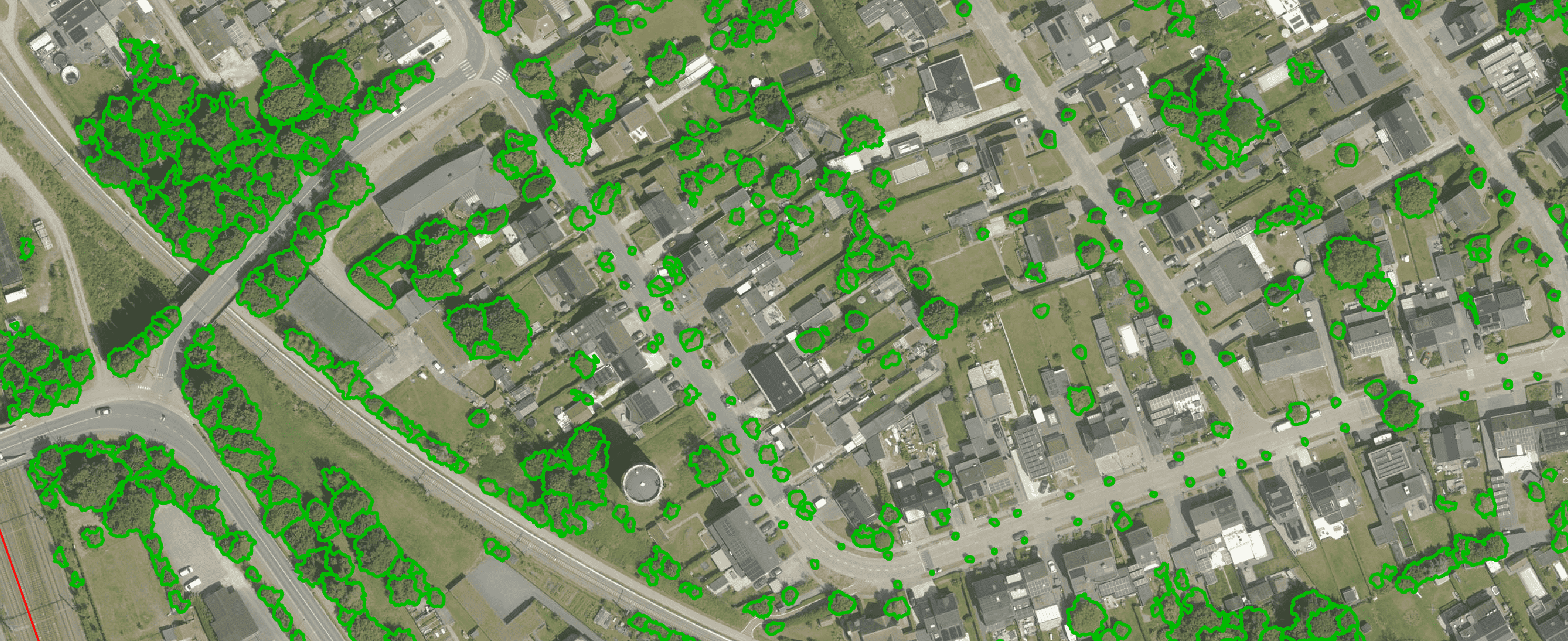
Get a complete overview of trees in your area, including individual characteristics such as crown area and height, and use the data to apply the European 3-30-300 rule for optimal urban greening. Ideal for municipalities, planners and green space managers who need accurate, scalable and policy-relevant geospatial data
read more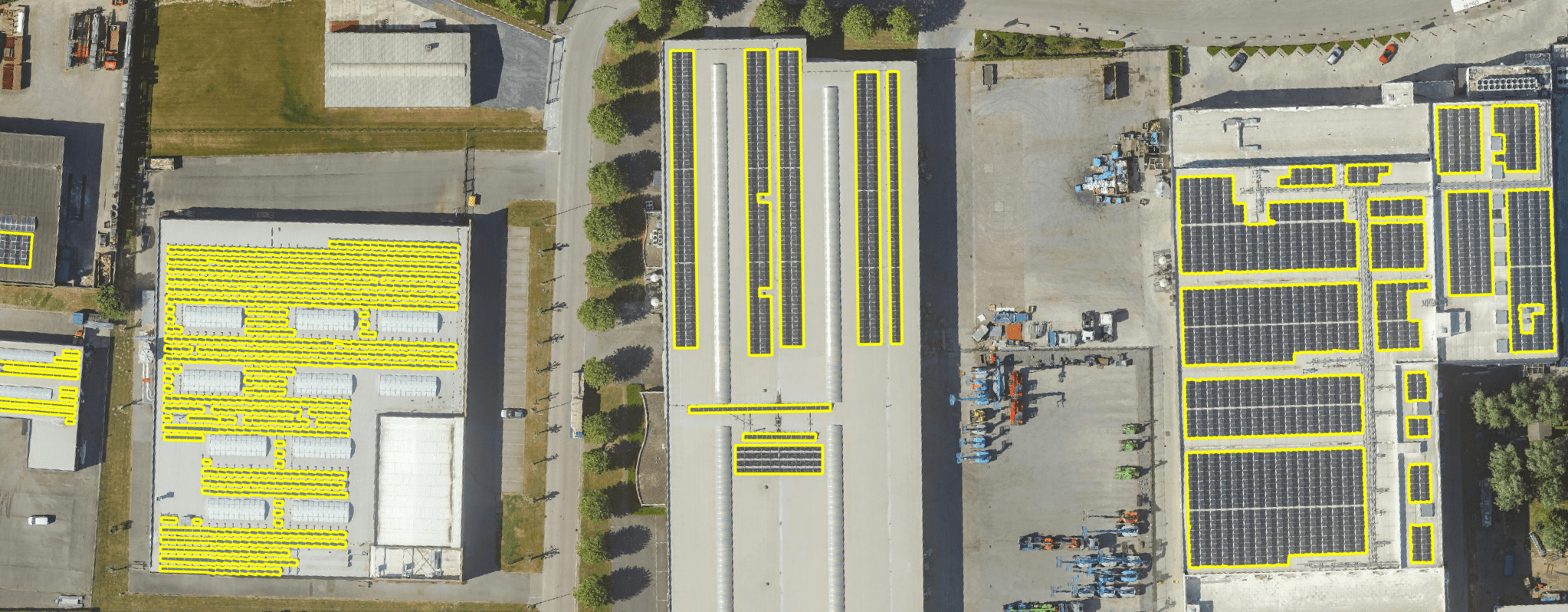
Get a detailed map layer of solar panels at building or cluster level, including surface area calculations per cluster. Ideal for anyone working with geospatial data who wants insight into energy potential and roof utilisation.
read more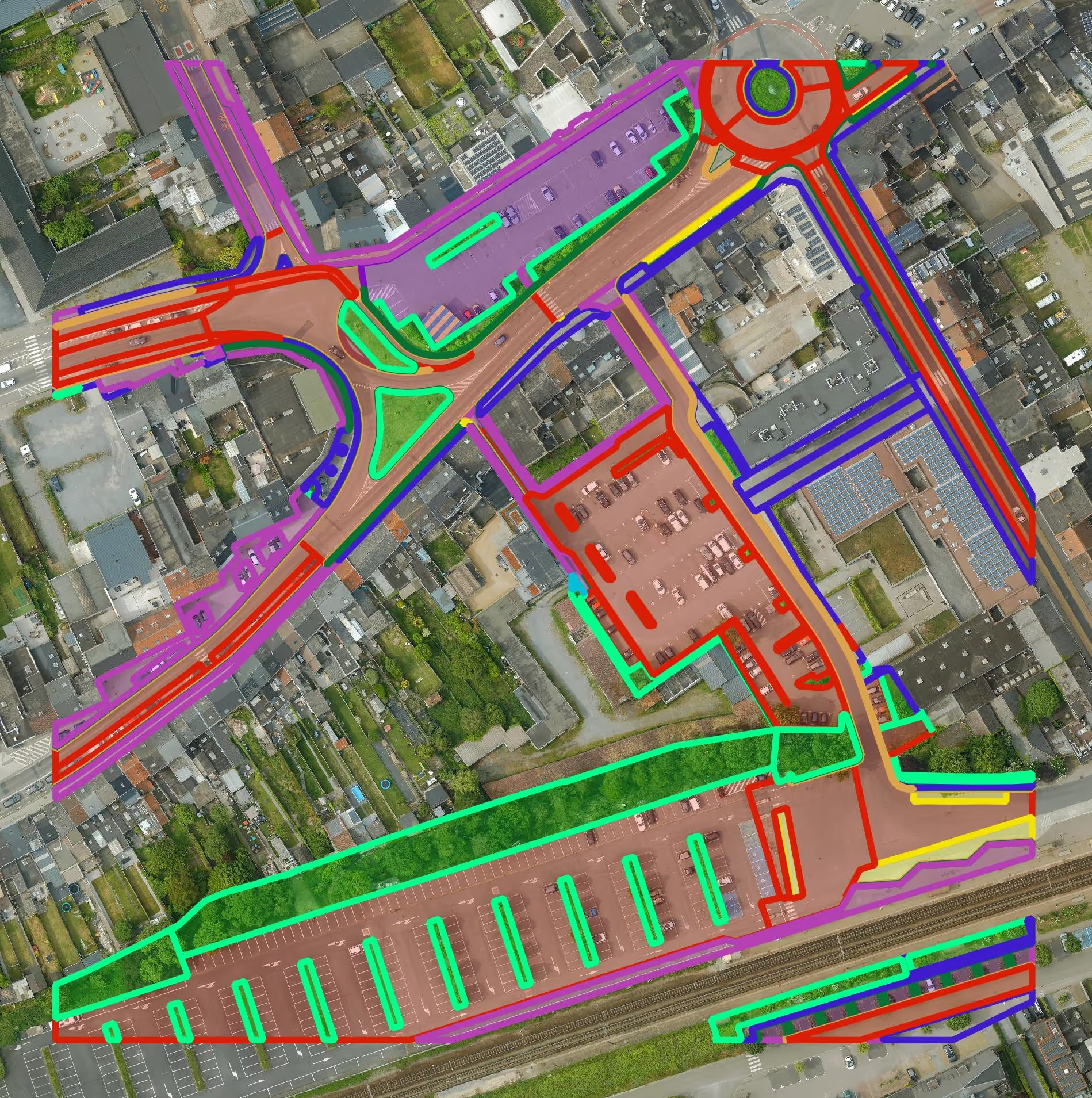
Get a detailed map layer of the public space with classification by object and material. Ideal for anyone working with geospatial data who needs more detail than existing reference data provides.
read more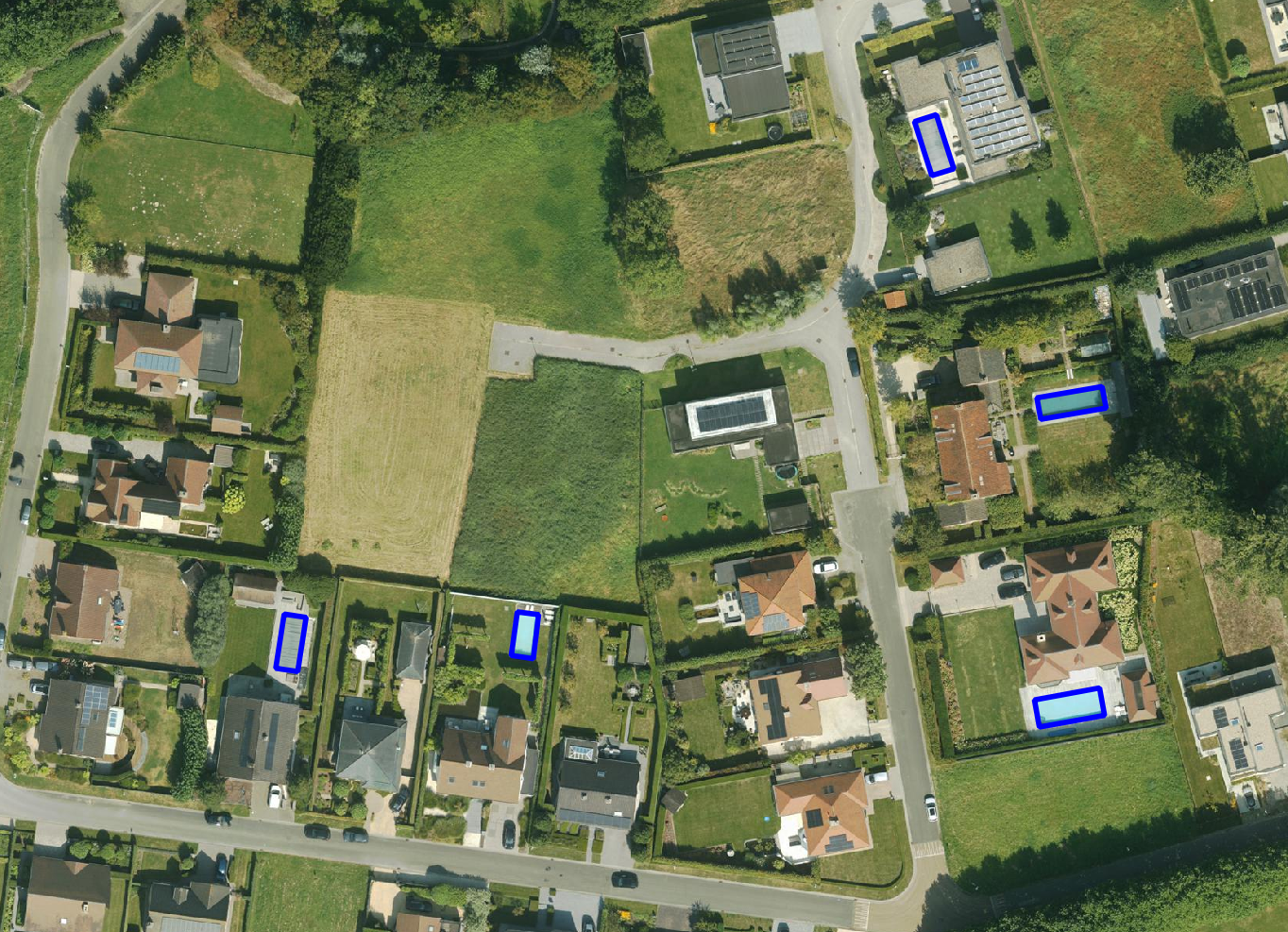
Get a detailed map layer of swimming pools at parcel or object level, including surface area calculations. Ideal for anyone using geospatial data for policy analysis, permits or trend research.
read more
Get a complete inventory of all road markings within your project area, classified into objects, lines and surfaces and linked to the correct underlying surface. This gives you objective data to support maintenance planning, reporting and policy decisions around mobility and asset management.
read more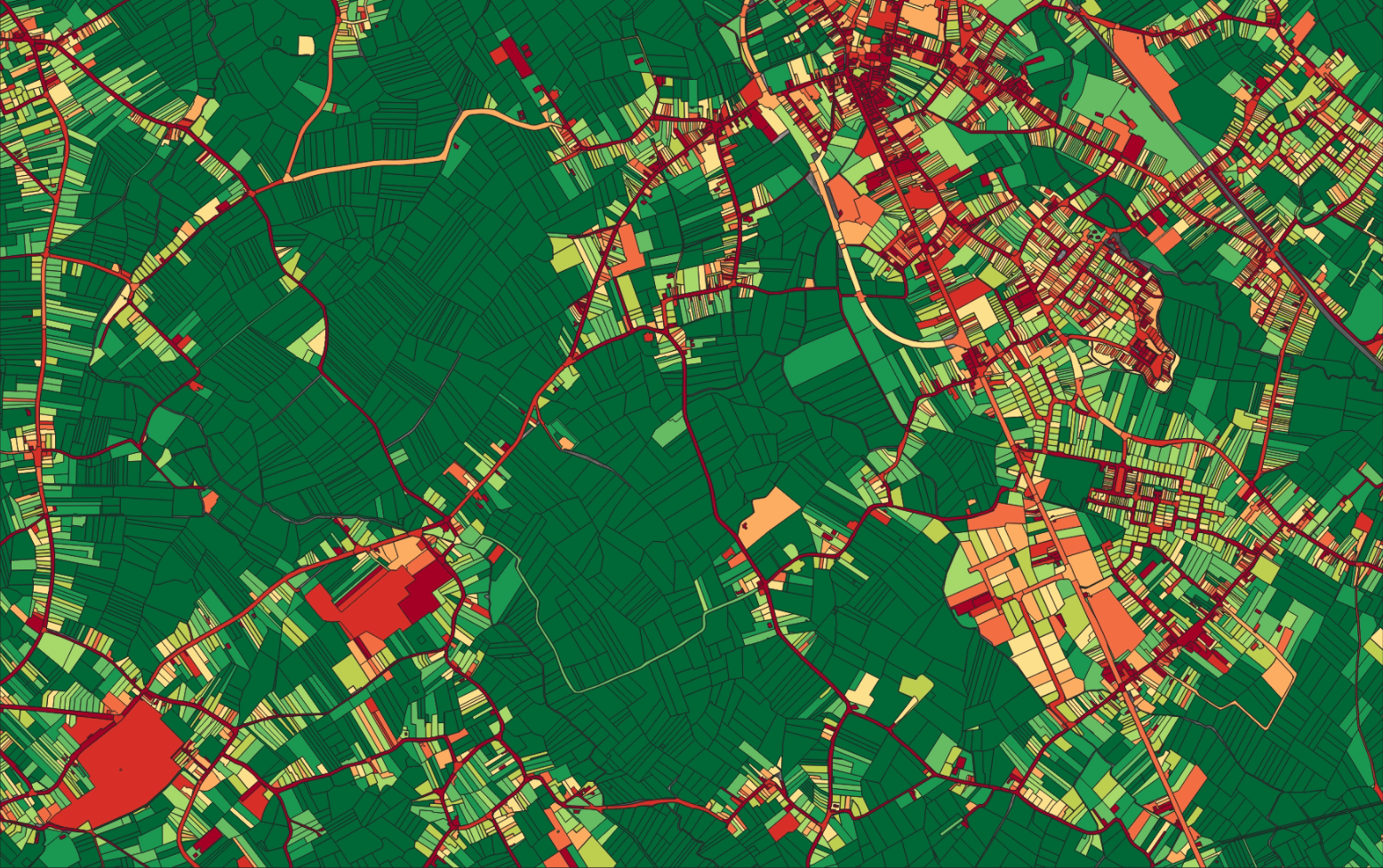
Our paved/unpaved surface maps provide a complete and objective overview of where the ground is paved or unpaved, in both private and public space.
read more
Every possible element of a cemetery is mapped. The result is a clear and organised plan that supports efficient and transparent cemetery management.
read more
Do you need a specific inventory that is not yet in our offering? We develop custom inventories tailored to your project. Thanks to our experience with aerial imagery and Deep Learning, we can detect and map almost any object type. Get in touch to discuss the possibilities.
Get in touchBy 2040, Flanders must be asbestos-safe. Our aerial imagery and Deep Learning flag which roofs are suspected per address, so we can work together efficiently towards a healthier and safer living environment.
read moreGet a complete overview of trees in your area, including individual characteristics such as crown area and height, and use the data to apply the European 3-30-300 rule for optimal urban greening. Ideal for municipalities, planners and green space managers who need accurate, scalable and policy-relevant geospatial data.
read moreGet a detailed map layer of solar panels at building or cluster level, including surface area calculations per cluster. Ideal for anyone working with geospatial data who wants insight into energy potential and roof utilisation.
read more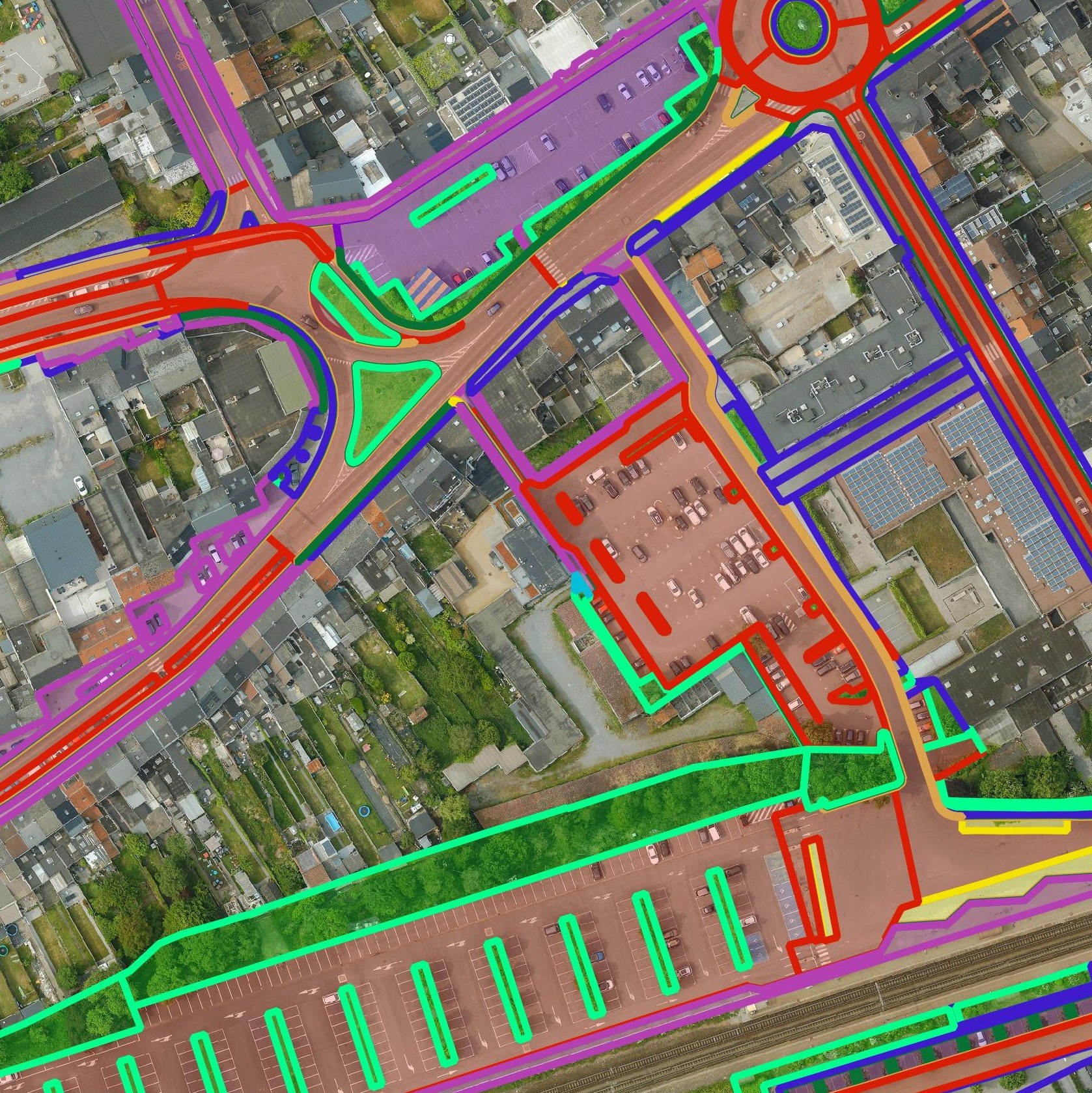
Get a detailed map layer of the public space with classification by object and material. Ideal for anyone working with geospatial data who needs more detail than existing reference data provides.
read moreGet a detailed map layer of swimming pools at parcel or object level, including surface area calculations. Ideal for anyone using geospatial data for policy analysis, permits or trend research.
read moreGet a complete inventory of all road markings within your project area, classified into objects, lines and surfaces and linked to the correct underlying surface. This gives you objective data to support maintenance planning, reporting and policy decisions around mobility and asset management.
read moreOur pavement surface maps provide a complete and objective overview of where the ground is paved or unpaved, in both private and public space.
read moreEvery possible element of a cemetery is mapped. The result is a clear and organised plan that supports efficient and transparent cemetery management.
read moreDo you need a specific inventory that is not yet in our offering? We develop custom inventories tailored to your project. Thanks to our experience with aerial imagery and Deep Learning, we can detect and map almost any object type. Get in touch to discuss the possibilities.
Get in touch
Monitor solar panel uptake at municipal level, support energy policy plans, subsidy programmes and sustainable urban development. Analyse which buildings are already covered and where potential remains for new installations.

Use the data to map energy yields, evaluate the load on the electricity grid and plan future solar energy expansions. This enables efficient steering on grid safety and production optimisation.

Link the solar panel inventory to real estate data to determine energy efficiency and sustainability ratings, or for spatial planning and architectural studies. Track trends in roof utilisation and analyse growth areas for solar energy over the years using our historical datasets.
Monitor solar panel uptake at municipal level, support energy policy plans, subsidy programmes and sustainable urban development. Analyse which buildings are already covered and where potential remains for new installations.
Use the data to map energy yields, evaluate the load on the electricity grid and plan future solar energy expansions. This enables efficient steering on grid safety and production optimisation.
Link the solar panel inventory to real estate data to determine energy efficiency and sustainability ratings, or for spatial planning and architectural studies. Track trends in roof utilisation and analyse growth areas for solar energy over the years using our historical datasets.